In the volatile world of cryptocurrency, even small differences in exchange rates can significantly impact your investment returns. Whether you’re a beginner just starting your crypto journey or an intermediate trader looking to optimize your strategy, finding the best rates to buy and sell crypto currency is crucial for maximizing profits and minimizing losses. This comprehensive guide will walk you through everything you need to know about securing optimal rates in the crypto market.
Why Getting the Best Rates Matters in Crypto Trading
The cryptocurrency market operates 24/7 with prices that can fluctuate dramatically within minutes. Unlike traditional financial markets, crypto exchanges can offer significantly different rates for the same assets. These rate disparities create both challenges and opportunities for traders.
When you’re dealing with larger transactions, even a 0.5% difference in exchange rates can translate to hundreds or thousands of dollars. For frequent traders, these small differences compound over time, potentially turning profitable strategies into losing ones.
Beyond the obvious financial benefits, finding the best rates also helps you:
- Maximize your purchasing power in volatile markets
- Reduce the impact of market entry and exit timing
- Build a more sustainable long-term investment strategy
- Minimize losses during market downturns
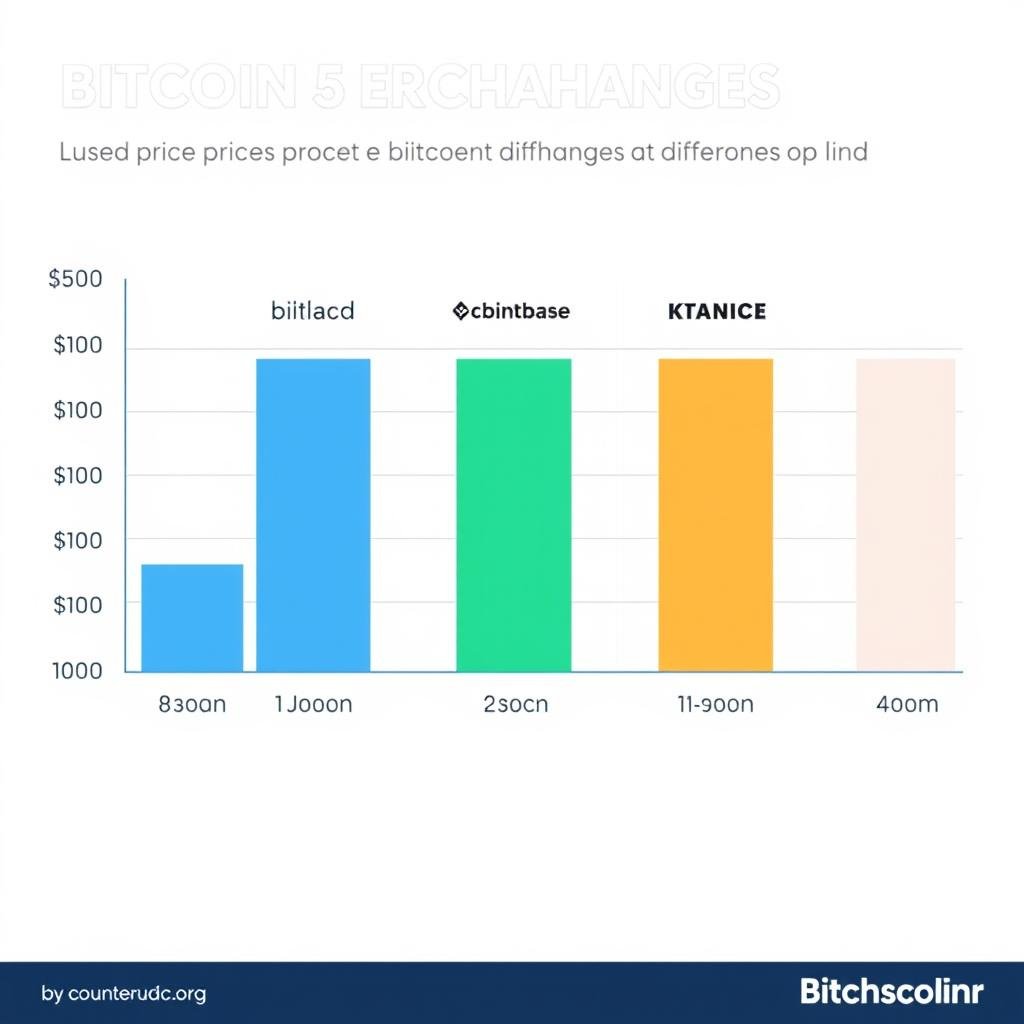
Did you know? The difference between the highest and lowest rates for Bitcoin across major exchanges can sometimes exceed 2% during periods of high volatility. On a $10,000 investment, that’s a $200 difference just by choosing the right platform!
Ready to start comparing crypto rates?
Use a rate comparison tool to instantly find the best places to buy and sell cryptocurrency.
Key Factors That Affect Cryptocurrency Exchange Rates
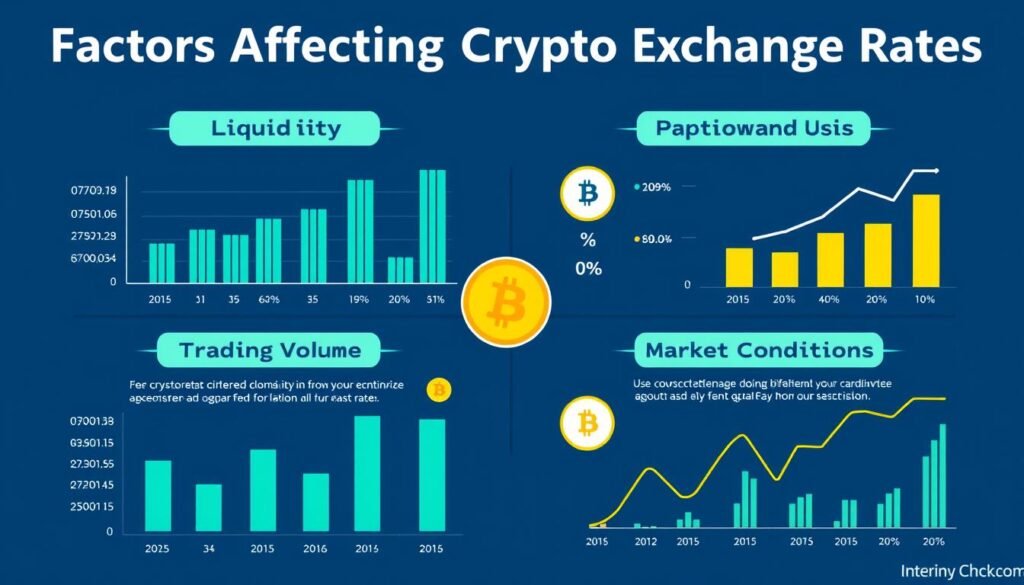
Understanding what influences crypto exchange rates is essential for finding the best deals. Several key factors determine the rates you’ll encounter when buying or selling digital assets:
Liquidity
Exchanges with higher liquidity typically offer better rates and smaller spreads between buy and sell prices. High liquidity means there are many buyers and sellers, creating a more efficient market with tighter spreads.
Platforms with low liquidity often have wider spreads to compensate for the increased risk of price slippage during order execution.
Trading Volume
Higher trading volumes generally correlate with better rates. Exchanges with more trading activity can offer more competitive prices because they have more orders to match.
Volume can vary significantly by cryptocurrency pair. Even large exchanges might have poor rates for less popular trading pairs with lower volume.
Platform Fees
Exchange fees directly impact your effective rate. These can include trading fees, deposit/withdrawal fees, and conversion fees. Some platforms advertise low rates but compensate with higher fees.
Fee structures vary widely, from flat fees to percentage-based models that change based on trading volume or token holdings.
Market Conditions
Volatility in the broader crypto market affects rates across all exchanges. During high volatility periods, spreads tend to widen as market makers protect themselves from rapid price changes.
Major market events like regulatory announcements or technological updates can create temporary rate disparities between exchanges.
Geographic Factors
Rates can vary by region due to regulatory differences, local demand, and banking relationships. Some exchanges offer better rates in specific countries or for certain fiat currencies.
Regional price premiums can emerge during periods of high local demand, creating arbitrage opportunities for savvy traders.
Payment Methods
The payment method you choose significantly impacts your effective rate. Credit card purchases typically incur higher fees than bank transfers. Some platforms offer better rates for specific payment methods.
Peer-to-peer platforms may offer competitive rates but with longer processing times and different risk profiles.
Comparing Different Types of Crypto Trading Platforms
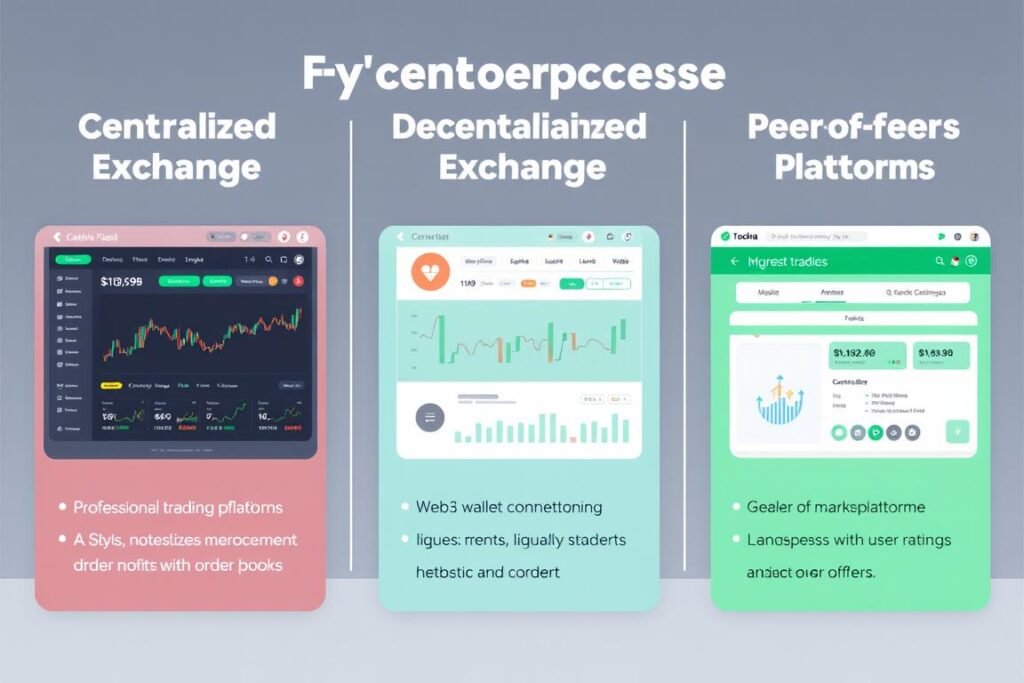
The type of platform you choose for buying and selling cryptocurrency can significantly impact the rates you receive. Each platform type has distinct advantages and limitations when it comes to finding the best rates.
- Higher liquidity and trading volume
- User-friendly interfaces ideal for beginners
- Multiple payment options (bank transfers, cards)
- Regulated in many jurisdictions
- Often have lower spreads for major cryptocurrencies
- May charge higher fees (0.1% to 1.5% per trade)
- Examples: Coinbase, Kraken, Gemini, Binance
Centralized Exchanges (CEX)
- No intermediary controlling funds
- Often lower fees than centralized exchanges
- Greater privacy and reduced KYC requirements
- Access to newer tokens not listed on CEXs
- May have higher slippage for large orders
- Requires technical knowledge to use effectively
- Examples: Uniswap, SushiSwap, PancakeSwap
Decentralized Exchanges (DEX)
- Direct trading between users without exchange middlemen
- Often better rates for fiat-to-crypto conversions
- Multiple payment methods including local options
- Negotiable rates with individual sellers
- Higher counterparty risk
- Longer transaction times
- Examples: LocalBitcoins, Paxful, Binance P2P
Peer-to-Peer Platforms
“The best platform for buying and selling crypto at optimal rates depends on your specific needs. Centralized exchanges offer convenience and liquidity, DEXs provide better rates for experienced users, while P2P platforms excel for fiat conversions in regions with limited banking options.”
Ready to find the best platform for your needs?
Create accounts on top exchanges to compare rates and features firsthand.
Step-by-Step Guide to Finding and Comparing Crypto Rates
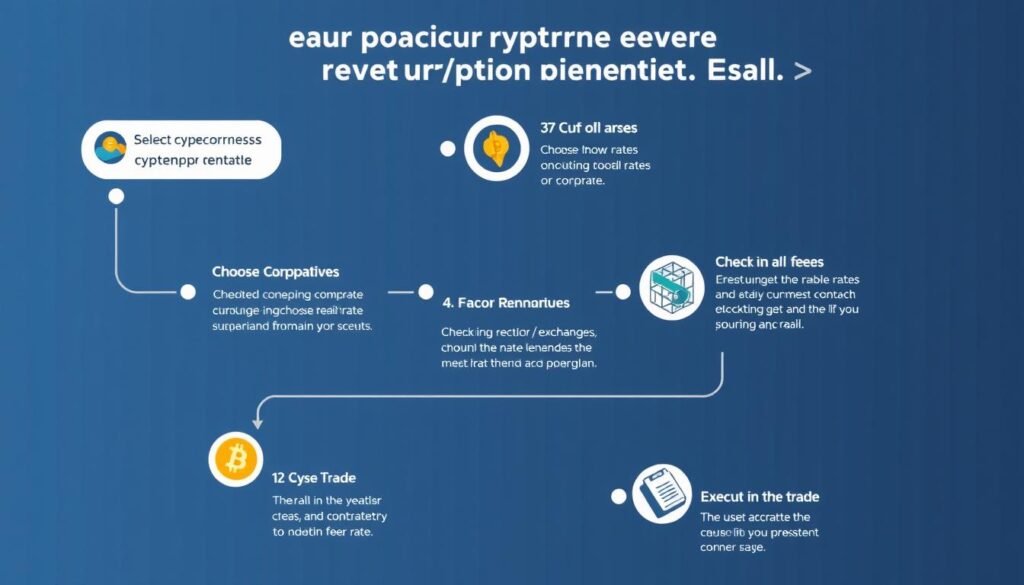
Finding the best rates requires a systematic approach. Follow these steps to ensure you’re getting the most favorable rates when buying and selling cryptocurrency:
Use Rate Aggregators and Comparison Tools
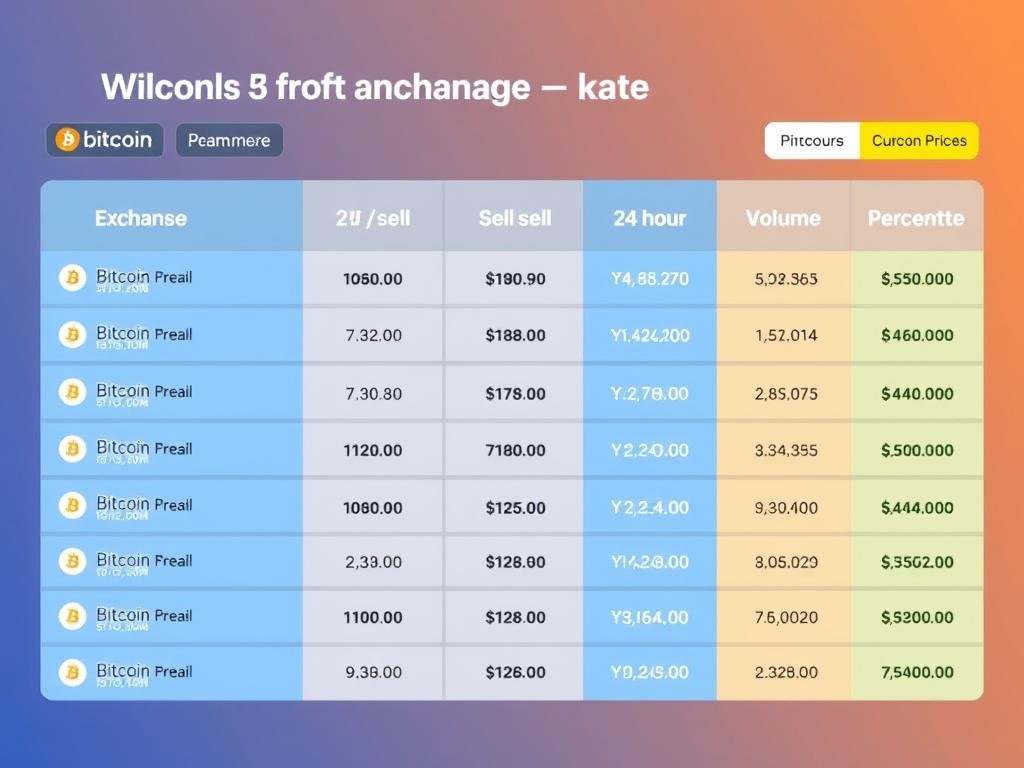
Start with specialized tools designed to compare rates across multiple exchanges simultaneously. These aggregators pull real-time data from various platforms, allowing you to quickly identify where you can get the best deal.
Recommended tools: CoinMarketCap, CoinGecko, Cryptowatch, and specialized rate comparison engines like CryptoCompare.
Check Multiple Exchange Types
Don’t limit yourself to one type of exchange. Check rates on centralized exchanges, decentralized platforms, and peer-to-peer marketplaces. During certain market conditions, DEXs might offer better rates than CEXs, or vice versa.
Create a shortlist of 3-5 platforms that consistently offer competitive rates for your preferred cryptocurrencies.
Calculate the Total Cost
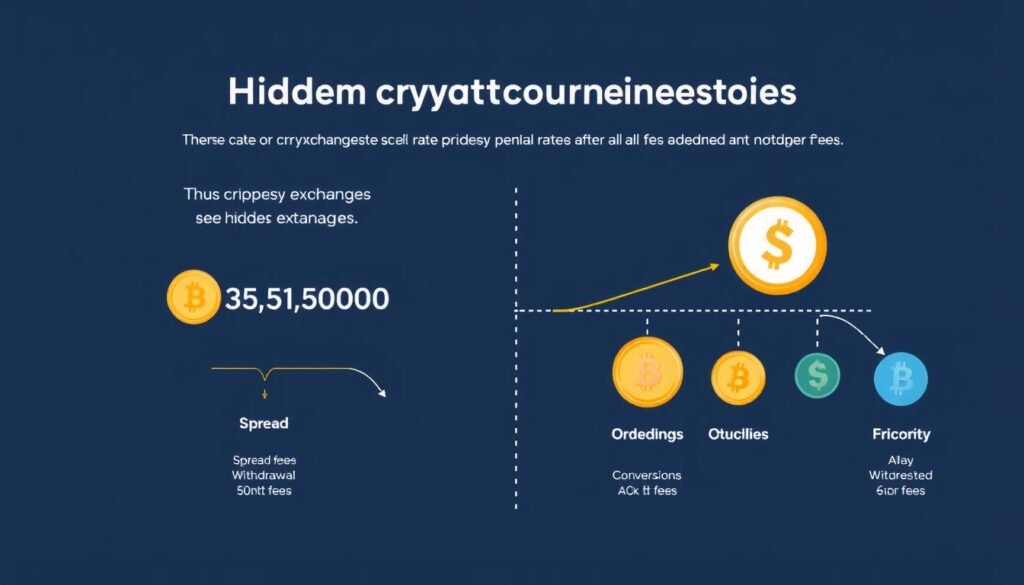
Look beyond the advertised exchange rate and calculate the total cost including all fees. This includes trading fees, deposit/withdrawal fees, network fees, and any hidden charges.
For example, an exchange offering a slightly better rate but charging 1% higher fees might actually provide worse value overall.
| Fee Type | Description | Typical Range | Impact on Effective Rate |
| Trading Fee | Charged on each trade execution | 0.1% – 1.5% | Direct reduction of effective rate |
| Deposit Fee | Charged when adding funds to exchange | 0% – 3.5% | Increases effective purchase price |
| Withdrawal Fee | Charged when moving crypto off exchange | Flat fee or 0.0005% – 0.5% | Reduces net proceeds from sales |
| Spread | Difference between buy and sell prices | 0.1% – 2% | Hidden cost that widens with volatility |
Consider Liquidity Depth
For larger transactions, check the order book depth to ensure you can execute your entire trade at the displayed rate. Exchanges with thin order books might show attractive rates for small amounts but offer much worse rates for larger volumes.
Most exchanges allow you to preview the exact execution price before confirming a trade.
Verify Payment Method Costs
Different payment methods can significantly affect your effective rate. Credit card purchases typically incur fees of 3-5%, while bank transfers might be free or have minimal fees but take longer to process.
Calculate the total cost including payment method fees to find the true best rate.
Important: Rates can change rapidly in the cryptocurrency market. Always verify the final rate just before executing a trade, as the rate shown during your research phase might have changed.
Strategies for Timing Your Trades to Get Optimal Rates
Beyond choosing the right platform, timing your trades strategically can help you secure better rates when buying and selling crypto currency. Here are effective timing strategies to consider:
Market Cycle Awareness
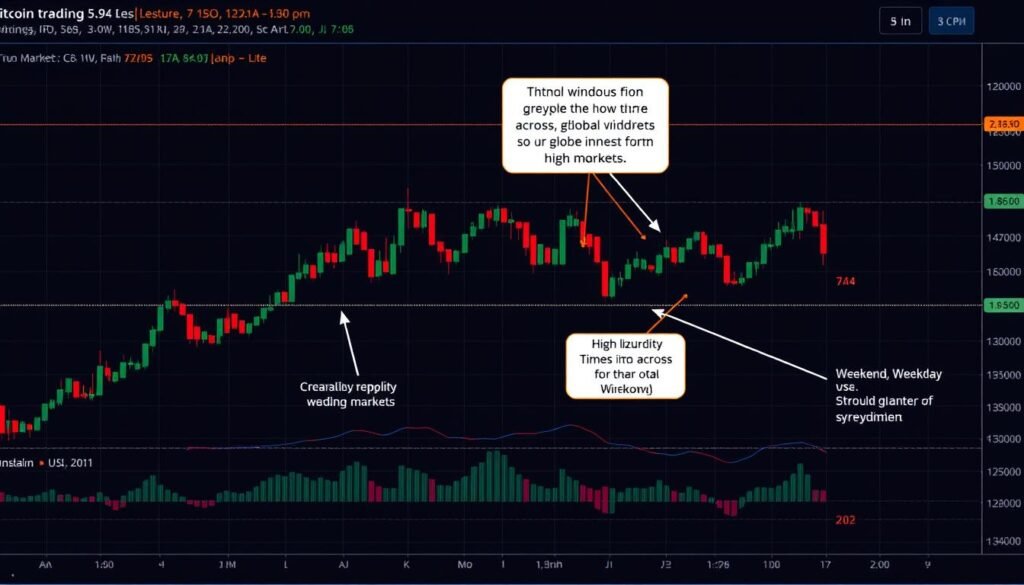
Cryptocurrency markets often follow cyclical patterns. Rates tend to be more favorable during periods of low volatility and steady trading.
- Monitor weekly and monthly trends to identify patterns
- Avoid buying during parabolic price increases
- Consider dollar-cost averaging to reduce timing risk
Time-of-Day Optimization
Crypto markets show distinct patterns throughout the day as different global markets become active. Rates can vary based on trading hours.
- Asian market hours often see different patterns than US hours
- Early morning (4-6 AM UTC) often has lower volatility
- Weekend trading typically has lower volume and wider spreads
Volatility Management
High volatility periods typically result in wider spreads and less favorable rates. Learning to identify and avoid these periods can improve your rates.
- Use volatility indicators like Bollinger Bands
- Set rate alerts instead of market orders during high volatility
- Consider limit orders to specify your acceptable rate
“The best rates aren’t just about where you trade, but when you trade. Patient traders who understand market rhythms often secure rates 1-2% better than those who trade impulsively.”
Pro Tip: Set up price alerts on multiple exchanges to notify you when rates reach your target levels. This allows you to act quickly when optimal conditions arise without constantly monitoring the markets.
Tools and Resources for Monitoring Real-Time Crypto Rates
Staying informed about the latest rates across multiple platforms is essential for finding the best deals. Here are the most effective tools and resources for monitoring cryptocurrency rates in real-time:
Price Aggregators
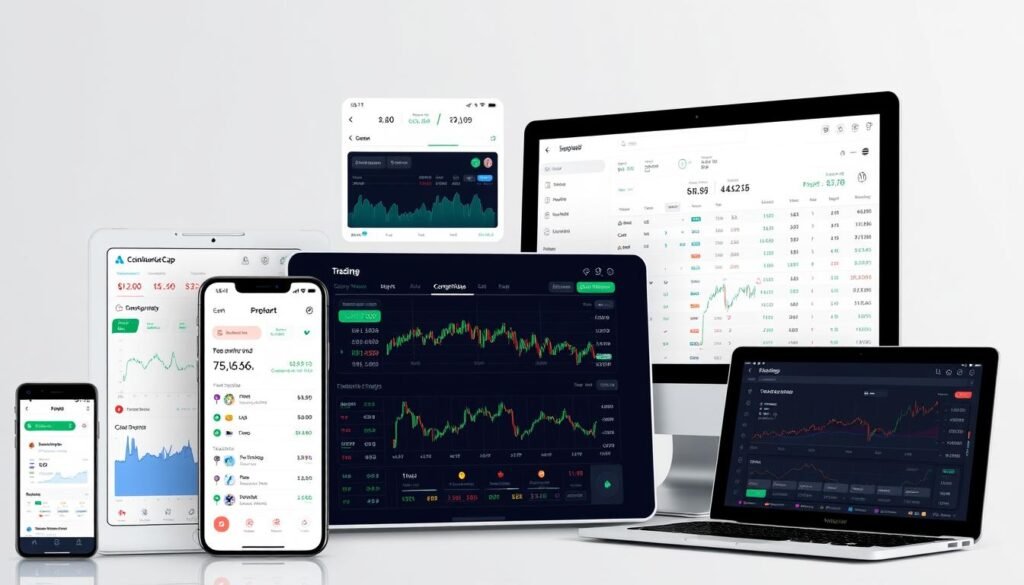
These platforms compile rates from multiple exchanges, allowing you to quickly compare prices across the market.
- CoinMarketCap: Comprehensive data on thousands of cryptocurrencies with exchange comparisons
- CoinGecko: Detailed exchange information including trading volumes and available pairs
- CryptoCompare: Advanced comparison tools with historical data analysis
Mobile Apps
Mobile applications that provide on-the-go access to rate information and alerts when conditions meet your criteria.
- Blockfolio/FTX: Portfolio tracking with price alerts across exchanges
- Delta: Customizable interface with detailed exchange comparisons
- TabTrader: Connect directly to multiple exchanges from one app
Advanced Trading Tools
Professional-grade platforms offering deep market analysis and sophisticated rate monitoring capabilities.
- TradingView: Advanced charting with exchange comparisons and custom alerts
- Coinigy: Multi-exchange trading platform with rate monitoring
- Cryptowatch: Real-time market data with customizable dashboards
Setting Up Effective Rate Alerts
Most monitoring tools allow you to set up custom alerts that notify you when specific rate conditions are met. Here’s how to set up effective alerts:
- Define Your Target Rate: Set specific price points that represent good buying or selling opportunities based on your strategy.
- Create Exchange-Specific Alerts: Set different alerts for different exchanges to catch rate disparities.
- Use Percentage Change Alerts: Get notified when rates change by a certain percentage within a specific timeframe.
- Set Up Spread Alerts: Create alerts for when the spread between exchanges exceeds a threshold, indicating potential arbitrage opportunities.
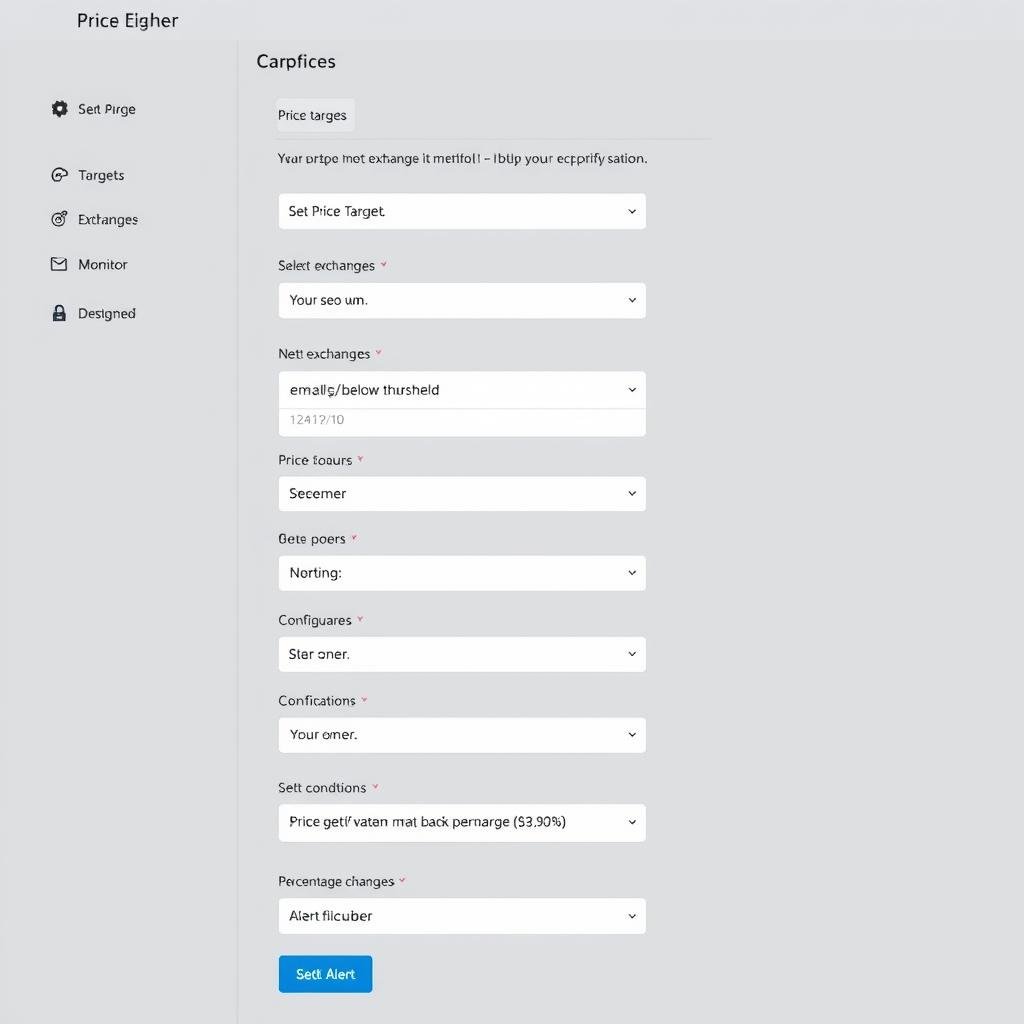
Pro Tip: Don’t rely on a single monitoring tool. Different platforms update at different rates and may have varying data sources. Using multiple tools provides redundancy and helps verify that you’re seeing accurate rate information.
Security Considerations When Trading at the Best Rates
Finding the best rates shouldn’t come at the expense of security. As you search for optimal places to buy and sell crypto currency, keep these essential security considerations in mind:
Secure Trading Practices
- Use exchanges with strong security track records and insurance coverage
- Enable two-factor authentication on all exchange accounts
- Verify withdrawal addresses multiple times before confirming
- Store long-term holdings in non-custodial wallets
- Use unique, strong passwords for each exchange
- Regularly monitor account activity for unauthorized transactions
Security Red Flags
- Exchanges offering rates significantly better than market average
- Platforms with limited or no information about security measures
- Exchanges with history of security breaches without proper resolution
- Requests to send cryptocurrency before receiving payment
- Pressure to act quickly on “limited-time” rate offers
- Lack of regulatory compliance or transparency
Balancing Rate Optimization with Security
While finding the best rates is important, it shouldn’t override security considerations. Here’s how to balance both priorities:
- Verify Exchange Legitimacy: Before using a new exchange offering attractive rates, research its security history, regulatory compliance, and user reviews.
- Understand Insurance Coverage: Check what protections are in place if the exchange experiences a security breach.
- Start Small: When testing a new platform with favorable rates, begin with small transactions until you’ve verified its reliability.
- Consider Withdrawal Policies: Some exchanges with great rates have restrictive withdrawal policies or high withdrawal fees that can lock in your funds.
Security Warning: If a rate seems too good to be true, it probably is. Extremely favorable rates far from market average can be signs of scams, market manipulation, or exchanges in financial trouble. Always verify the legitimacy of platforms offering unusually attractive rates.
Case Studies: Successful Rate Optimization Strategies
Learning from real examples can help you develop effective strategies for finding the best rates. Here are three case studies demonstrating successful approaches to optimizing cryptocurrency exchange rates:
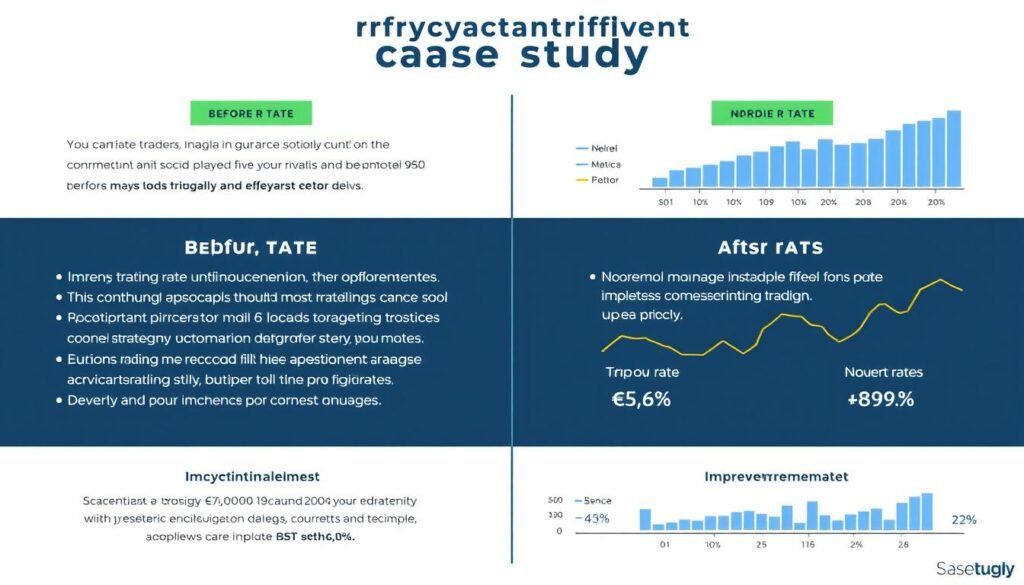
Case Study 1: Multi-Exchange Strategy
Scenario: An investor looking to purchase $10,000 worth of Bitcoin wanted to minimize costs and find the best possible rate.
Strategy: Instead of using a single exchange, they split their purchase across three platforms based on real-time rate comparisons.
Implementation:
- Used CoinMarketCap to identify exchanges with the best rates
- Allocated $4,000 to Exchange A with lowest fees but slightly higher price
- Allocated $4,000 to Exchange B with best spot price but average fees
- Allocated $2,000 to a DEX during low network congestion
Result: By splitting the purchase, they saved approximately 1.7% compared to using only their regular exchange, resulting in $170 of savings.
Case Study 2: Time-Based Optimization
Scenario: A trader needed to sell a significant amount of Ethereum but was concerned about getting poor rates due to market impact.
Strategy: Instead of selling all at once, they analyzed historical rate patterns and identified optimal selling windows.
Implementation:
- Used TradingView to analyze hourly rate patterns over 30 days
- Identified that rates were consistently better during European morning hours
- Set up limit orders at target rates rather than using market orders
- Split the sale into 5 equal portions over 5 days
Result: By timing their sales and using limit orders, they achieved an average rate 2.3% better than if they had sold everything immediately, increasing their proceeds by over $500.
Case Study 3: Fee Optimization
Scenario: A frequent trader was losing significant profits to trading fees across multiple platforms.
Strategy: They conducted a comprehensive fee analysis and restructured their trading approach to minimize fee impact.
Implementation:
- Consolidated trading to fewer exchanges to reach higher volume tiers
- Purchased exchange-native tokens to qualify for fee discounts
- Switched from market orders to limit maker orders when possible
- Used exchanges with rebate programs for high-volume traders
Result: By optimizing their fee structure, they reduced their average trading costs by 70%, from 0.25% per trade to just 0.075%, significantly improving their effective rates and profitability.
“The most successful crypto traders don’t just focus on entry and exit points—they obsessively optimize every aspect of their trading infrastructure, from exchange selection to fee structures. This attention to detail often makes the difference between profitability and loss.”
Key Takeaway: All three case studies demonstrate that rate optimization is rarely about finding a single “best” exchange. Instead, it involves developing a systematic approach that combines multiple strategies: comparing rates across platforms, timing transactions strategically, and minimizing fee impacts.
Conclusion: Mastering the Art of Finding the Best Crypto Rates
Finding the best rates to buy and sell crypto currency is both an art and a science. It requires diligence, research, and a systematic approach to comparing options across the cryptocurrency ecosystem. By understanding the factors that influence rates, utilizing the right tools, and implementing strategic timing, you can significantly improve your trading outcomes.

Actionable Tips for Consistently Getting the Best Rates
- Develop a Rate Comparison System: Create a personal process for quickly checking rates across your preferred platforms before each transaction.
- Calculate Total Costs: Always factor in all fees and charges to determine the true effective rate you’re receiving.
- Diversify Exchange Relationships: Maintain accounts on multiple exchanges to take advantage of rate differences and promotional offers.
- Stay Informed: Follow exchange announcements about fee changes, promotions, and new features that might affect rates.
- Practice Patience: Sometimes the best strategy is waiting for more favorable market conditions rather than accepting suboptimal rates.
- Use Limit Orders: When possible, set your desired rate with limit orders rather than accepting whatever market rate is available.
- Consider Volume Discounts: If you trade frequently, consolidate activity to benefit from volume-based fee discounts.
- Monitor Network Fees: For withdrawals and transfers, timing transactions during periods of low network congestion can significantly reduce costs.
- Reassess Regularly: The exchange with the best rates today might not be the same next month. Regularly review your options.
- Balance Rate and Security: Never sacrifice security for slightly better rates. The best rate comes with proper risk management.
Remember that the cryptocurrency market is constantly evolving. Exchanges update their fee structures, new platforms emerge, and market conditions shift. Staying adaptable and continuing to refine your approach will help you consistently find the best rates for buying and selling cryptocurrency over the long term.
Ready to start getting the best crypto rates?
Create accounts on top exchanges and use rate comparison tools to start optimizing your cryptocurrency trading today.
Frequently Asked Questions About Crypto Currency Rates
Why do cryptocurrency rates vary between exchanges?
Cryptocurrency rates differ between exchanges due to several factors: varying liquidity levels, different fee structures, geographic market segmentation, and the basic market dynamics of each platform. Each exchange is essentially its own marketplace with unique supply and demand characteristics. Additionally, some exchanges may include fees in the displayed price while others show the raw market price and add fees separately.
How often should I compare rates across exchanges?
For active traders, comparing rates before each transaction is recommended. For less frequent traders, a weekly review of your preferred exchanges can help you stay informed about general rate trends. During periods of high volatility, rates can diverge significantly between exchanges, making more frequent comparisons valuable. Setting up automated rate alerts can also help you identify opportune moments without constant manual checking.
Is it worth switching exchanges to save 0.5% on rates?
Whether a 0.5% rate improvement justifies switching exchanges depends on your transaction size and frequency. For a ,000 transaction, 0.5% represents in savings. For frequent traders, these savings compound significantly over time. However, you should also consider other factors like security, withdrawal fees, and platform reliability. For very small transactions, the absolute savings may not justify the time investment of switching platforms.
How do I find the best rates for less popular cryptocurrencies?
Finding optimal rates for less popular cryptocurrencies requires more research than for major coins like Bitcoin. Start with specialized aggregators like CoinGecko or CoinMarketCap that list trading pairs across multiple exchanges. For very niche coins, check decentralized exchanges (DEXs) which often list tokens before they reach centralized platforms. Be aware that less popular cryptocurrencies typically have lower liquidity, which can result in wider spreads and more significant price impact for larger orders.
Are peer-to-peer (P2P) platforms good for getting the best rates?
P2P platforms can offer competitive rates, especially for fiat-to-crypto conversions in regions with limited banking options or high exchange fees. They allow direct negotiation with other traders, potentially securing better rates than traditional exchanges. However, P2P trading comes with additional considerations: longer transaction times, potential counterparty risk, and varying escrow fees. P2P platforms are particularly valuable when traditional exchanges have limited payment options or high fees for your preferred payment method.